 |
The Hill School Eldoret, Kenya |
|
|||||
|
|
|
||||||
|
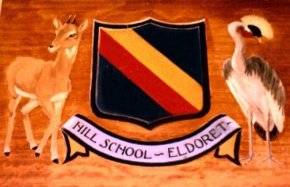
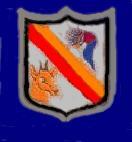
The School Crest which hangs above the entrance to the Junior Tuition block was painted by art teacher Gwen Bristow. The oribi represents the Uasin Gishu district of Kenya and the crested crane represents Uganda - the catchment area for most of the pupils in the mid 1950s. The red and yellow diagonal lines represent the Afrikaner Highlands School which was absorbed into Hill School in January 1956. |
|
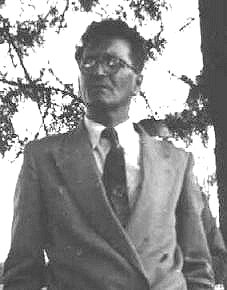
Headmaster Arthur Brindley was highly thought of by both staff and pupils alike and is remembered with affection by all of us who attended Hill School during his headship. This photograph was taken in Eldoret at the end of term some time in 1956 when he took Uganda pupils into town to watch a parade near the station. |
|||||
|
|
|||||||
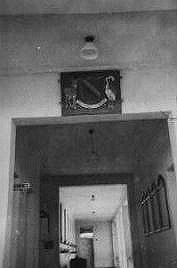 |
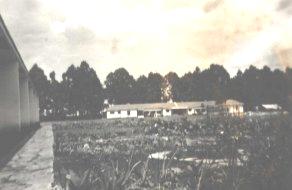
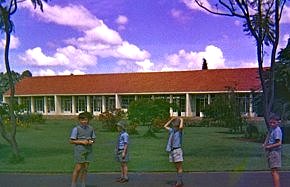
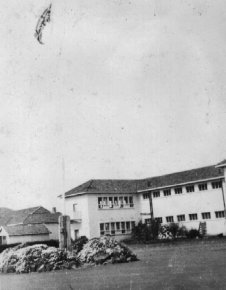
The entrance to the Junior Tuition Block (left). The House Boards were for Stanley (green), Livingstone (blue), Lugard (red) and Portal (yellow). The Flagstaff (right) with girls' Block 4 behind. PHOTOs Malcolm McCrow
|
 |
|||||
|
|
|
||||||
|
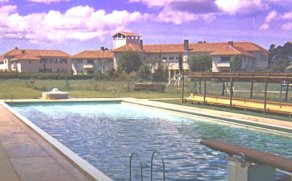
The Sanatorium viewed from the Senior Pupils' Class Gardens (left). The swimming pool was completed in 1959 (right) - PHOTOs Malcolm McCrow |
|||||||
|
|
|
||||||
|
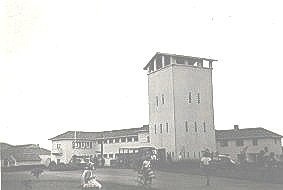
The campus is dominated by the Water Tower - taken (left) 1956 and again (right) in 1962. The school bus (actually a lorry) can just be discerned in both photographs - PHOTOs Malcolm McCrow |
|||||||
|
|
|
||||||
|
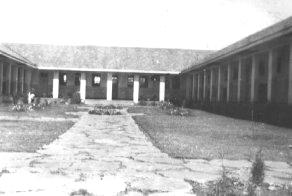
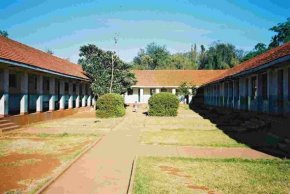
The Senior Tuition Block Quadrangle in 1957 (left) and in 2003 (right). PHOTOs (left) Malcolm McCrow (right) David Baird |
|||||||
|
|
|
||||||
|
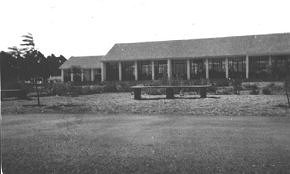
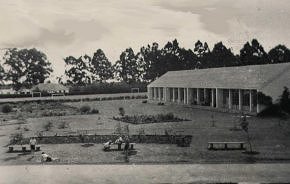
The Junior Tuition Block from Games Field in 1956 (left) and later in 1962 (right) - PHOTOs Malcolm McCrow |
|||||||
|
|
|
||||||
|
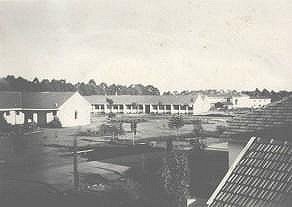
The Tuition Blocks viewed from a balcony in [boarding] Block 6 (left). The gardens (right) with the headmaster's house by the trees which bordered the Kisumu Road - PHOTOs Malcolm McCrow |
|||||||
|
|
|
||||||
|
Block 5 and the communal dining hall (left) shared with Block 6 (right) - PHOTOs Malcolm McCrow |
|||||||
|
|
|
||||||
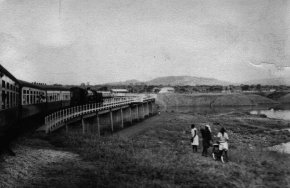
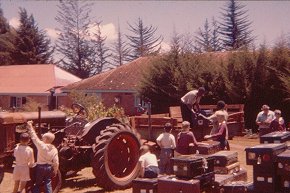
| Many pupils' parents worked in Uganda. School holidays for pupils resident in Uganda were always associated with School Trains. In the run up to end of term, boys would carve "propellers" to hold out the train window and watch them turn in the slipstream of the train as it meandered through the countryside at around 25 mph. This end of term scene (right) was actually taken at Kaptagat Preparatory School in 1962 when I was escort to pupils travelling by Mail Train to Uganda. | |||||||
|
|
|
||||||
|
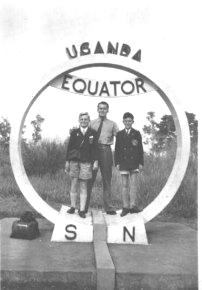
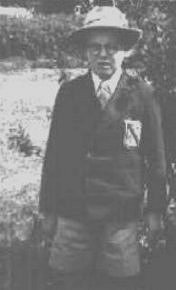
In January 1957 - my Father with me and Eugene Mersey on the equator on the Kampala/Masaka road (left) - PHOTO Jane McCrow. A Hill School pupil on Christmas Day 1955 in Masaka (right) - PHOTO Mary Warwick |
|||||||
|
HILL SCHOOL in the 21st Century |
|||||||
|
|
|
||||||
|
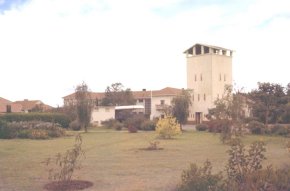
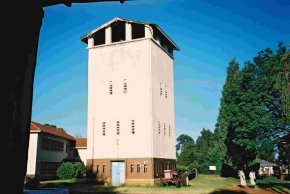
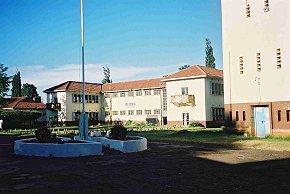
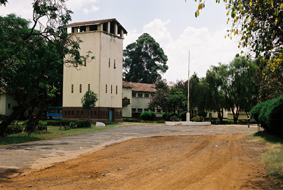
The Hill School in 2003. The Water Tower (left) and Block 4 (right) - PHOTOS David Baird. |
|||||||
|
|
|
||||||
|
The Water Tower (left) is dwarfed by the fifty year old trees - as is boys' Block 5 (right) - PHOTOs Louise Heckl (nee Erasmus) |
|||||||
|
|
|
||||||
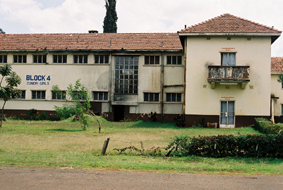
| The Sanatorium with the trees behind bordering the Kisumu Road (left). Girls' Block 4 (originally Block 2 until 1957) (right) - PHOTOs - Louise Heckl | |||||||
|
|
|
||||||
|
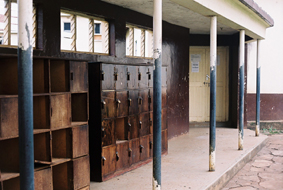
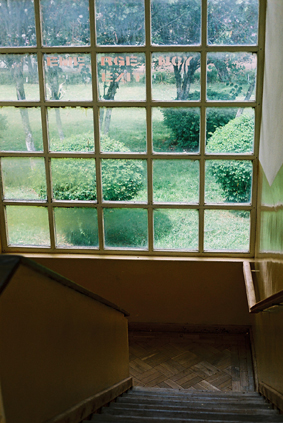
The lockers (above) between the dining hall and the boarding block were for out-door shoes. Only slippers were allowed in the block to avoid damage to the highly polished parquet floors - still in evidence in the shot of a stairwell (right). PHOTOs - Louise Heckl
|
|||||||
|
|
|
||||||
|
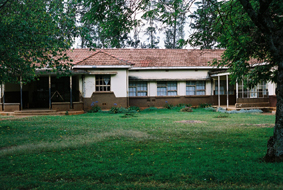
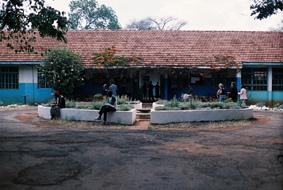
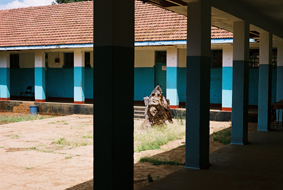
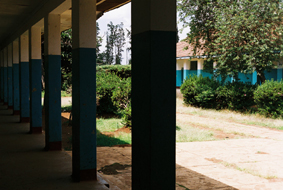
A housemaster's or housemistress's flat viewed from the rear of a block (left). Junior Tuition Black (right) - PHOTOs - Louise Heckl |
|||||||
|
|
|
||||||
|
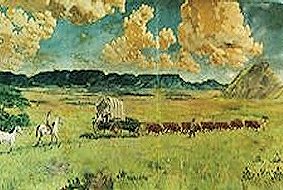
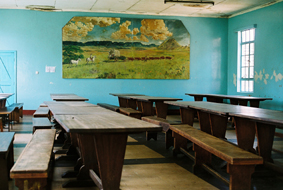
The Dining Room serving Blocks 3 & 4 with a painting by Gwen Bristow depicting an ox wagon and the pioneers who trekked up from the rail head into the Highlands - met die kreun van ossewa: in the top corner Gwen has set the year as 1901. The painting was hung in the Dining Hall in its heyday - and it is still there. Gwen's other well-known painting of the Mad Hatter's Tea Party is in the Blocks 1 & 2 Dining Hall. Blocks 1 & 2 used to be for very young pupils, but now accommodate girls. PHOTOs - Louise Heckl |
|||||||
|
|
|||||||
|
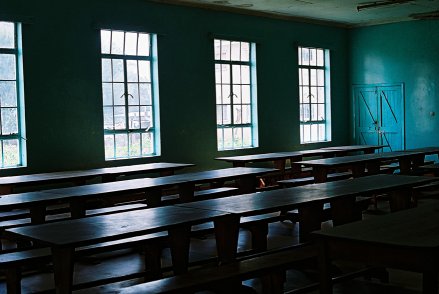
Another shot of the Blocks 3 and 4 Dining Hall (left). The tables and benches used to be arranged across the Dining Hall at right angles to the windows. There was a row of staff tables at one end of the Hall, parallel to those of the pupils. It was at these tables that the staff took lunch. In the mornings a teacher would sit at the head of each table. At supper, each table was headed by a prefect. In the Boys' Block Dining Hall (5&6), anyone caught talking during the enforced silence periods would be made to go and stand by the window wall. The signal for silence was a single clap of the hands by the teacher on duty. Anyone who had been called out for talking or other misdemeanours would have to wait behind at the end of the meal and receive one or more strokes of the tekkie (Afrikaans: gym shoe) on his backside. PHOTO - Louise Heckl |
|||||||
|
|
|
||||||
|
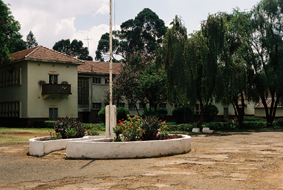
The Senior Tuition block quad (left and right) - PHOTOs Louise Heckl |
|||||||
|
|
|
||||||
|
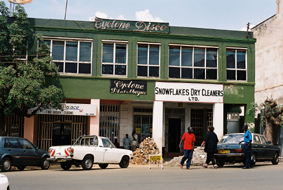
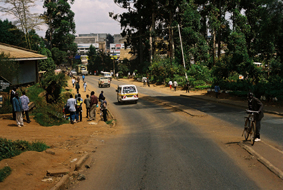
Now a Disco, Duncan's Tearoom (left) was a favourite meeting place which had an English market town atmosphere - although the manageress in 1955 was a Scot from Forfar. Pupils in Standard Six and Standard Seven were given fifty cents (equivalent to an old English sixpence in the days when the East African shilling was on par with its British counterpart). When I asked matron what I could buy for 50c she replied: "A nice pork pie out of Duncans'." The road down to the Sosiani River (right) - PHOTOs Louise Heckl |
|||||||
|
|
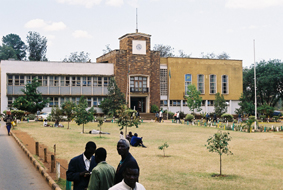
The Town Hall - not much changed
since the 1960s (left) PHOTOs Louise Heckl contact me: malcolm@mccrow.org.uk |
||||||